
If you are wondering where Montenegro is located, the short answer is that Montenegro is a small country in southeastern Europe, on the Balkan Peninsula, along the Adriatic Sea. Despite its size, Montenegro sits at a crossroads of cultures, coastlines, and mountains, which is why it often surprises first-time travelers.
This guide explains exactly where Montenegro is, how it fits into Europe, and what makes its location so important for travel. Everything is explained simply, without assumptions, so it is easy to understand even if this is your first time hearing about the country.
Quick glance: Montenegro sits on Europe’s Balkan Peninsula, along the Adriatic Sea, between Croatia and Albania.
Table of Contents
Which Countries Border Montenegro?
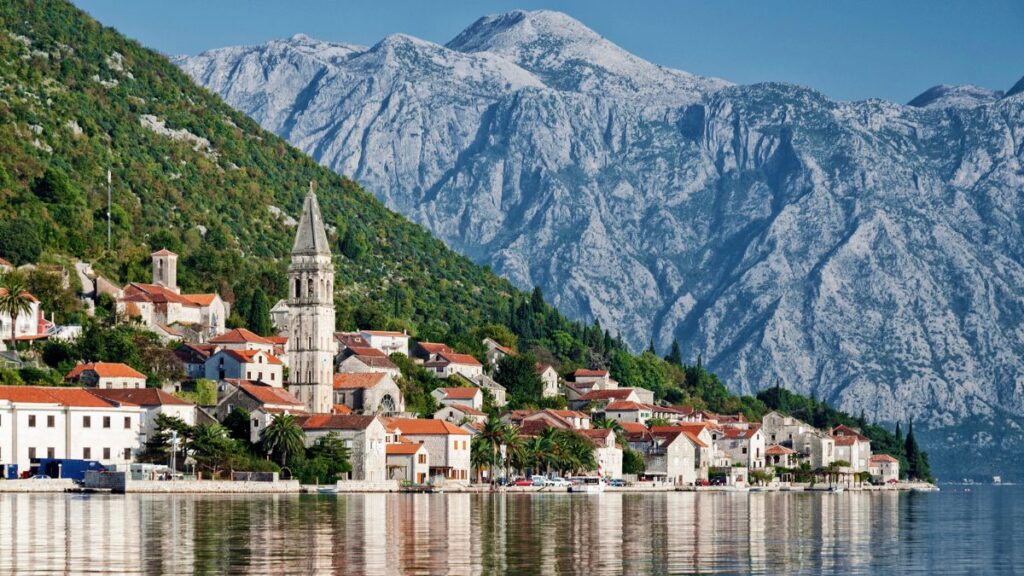
Understanding Montenegro’s borders makes its location much clearer. Montenegro shares land borders with five countries:
- Croatia to the northwest
- Bosnia and Herzegovina to the north
- Serbia to the northeast
- Kosovo to the east
- Albania to the southeast
To the southwest, Montenegro opens directly onto the Adriatic Sea. This coastline is one of the main reasons the country attracts travelers, especially those interested in beaches, historic coastal towns, and scenic sea views.
Because of these borders, Montenegro is often combined with trips to Croatia, Albania, or Bosnia, especially by travelers exploring the Balkans.
What Is Montenegro Known For?
Montenegro is known for its dramatic natural scenery, compact size, and mix of coastal and mountain landscapes. The country offers medieval towns, clear Adriatic waters, deep canyons, and national parks within short driving distances.
It is also known for historic coastal towns such as Kotor, Budva, and Perast, which combine old architecture with scenic views. Inland areas are famous for rugged mountains and outdoor activities like hiking and rafting.
This diversity is directly tied to Montenegro’s location between the sea and the mountains, which is one of its biggest attractions.
Places to Visit in Montenegro and Activities to Do
Quick ideas for first time travelers. Pick a few bases, then mix coast, old towns, and nature days.
Kotor and the Bay
Old town walk, bay boat ride, and a fortress viewpoint for the classic postcard scene.
- Walled old town stroll
- Fortress climb and views
- Boat ride around the bay
Budva coast days
Beach time plus an easy old town visit. A strong pick for lively evenings in season.
- Beach hopping
- Old town sunset walk
- Evening waterfront dining
Perast day trip
Small, scenic, calm. Ideal for a slower half day with water views and photos.
- Waterfront cafes
- Boat to Our Lady of the Rocks
- Short photo stops
Durmitor nature
Mountain scenery and fresh air. Great for hikes, viewpoints, and outdoor adventure.
- Short hikes and viewpoints
- Scenic drives
- Rafting near the Tara River area
Lake Skadar
A relaxed inland day with boat rides, birdlife, and quiet villages nearby.
- Boat ride on the lake
- Bird watching
- Slow afternoon lunch
Sveti Stefan viewpoint
A quick stop for photos. Best paired with nearby beaches or a coastal walk.
- Viewpoint photo stop
- Nearby beach time
- Coastal stroll
Where Is Montenegro on a Map?
On a map, Montenegro appears as a compact country with a curved coastline and a mountainous interior. The western edge runs along the Adriatic Sea, while the eastern regions rise sharply into hills and highlands.
Most maps show Montenegro just below Croatia’s famous Dalmatian Coast. Cities like Dubrovnik are very close to the Montenegrin border, which surprises many first-time visitors. In fact, it is possible to travel between coastal towns in Croatia and Montenegro in just a few hours by road.
Looking at a map also shows how close Montenegro is to Italy across the Adriatic Sea, even though there is no direct land connection.
Is Montenegro a Country?
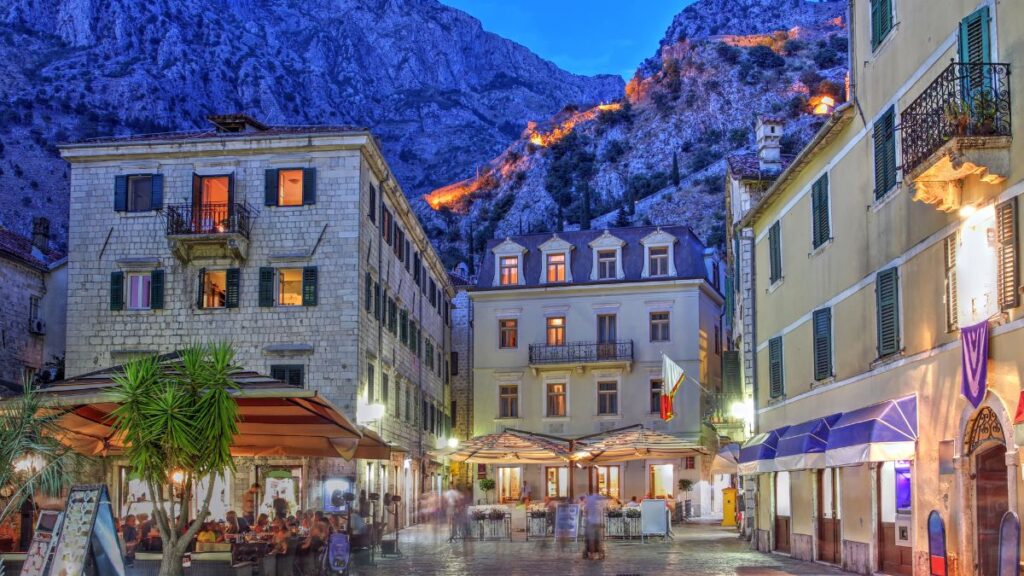
Yes, Montenegro is an independent country. It became fully independent in 2006 after separating from Serbia and Montenegro, which was a state union at the time.
Since independence, Montenegro has established its own government, currency, and international identity. It is recognized by the United Nations and maintains diplomatic relations with countries around the world.
Despite being relatively young as a modern independent state, Montenegro has a long and complex history shaped by empires, kingdoms, and regional powers.
What Is the Capital of Montenegro?
The capital of Montenegro is Podgorica. It is located in the central part of the country, not on the coast.
Podgorica serves as the political and administrative center, but it is not the main tourist destination. Most visitors spend more time in coastal towns or historic cities, while Podgorica is often used as a transport hub.
An interesting detail for travelers is that Montenegro also has a historic royal capital called Cetinje, which played an important role in the country’s past and is still culturally significant today.
What Language Do They Speak in Montenegro?
The official language of Montenegro is Montenegrin. It is closely related to Serbian, Croatian, and Bosnian, and speakers of these languages can generally understand each other.
For travelers, the good news is that English is widely spoken, especially in tourist areas, hotels, restaurants, and transport services. Younger people and those working in tourism usually have a good command of English.
This makes Montenegro an easy destination to navigate for first-time visitors, even without knowing the local language.
Is Montenegro Safe for Tourists?
One of the most common questions travelers ask is whether Montenegro is safe. In general, Montenegro is considered a safe country for tourists.
Violent crime rates are low, and most visits are trouble-free. Like anywhere else, basic precautions are recommended, such as watching personal belongings in busy areas and using licensed transport services.
Tourist infrastructure has improved significantly in recent years, and popular destinations are well accustomed to international visitors. Solo travelers, couples, adventure enthusiasts, and families regularly visit Montenegro without safety concerns.
How Many Days in Montenegro for First Timers?
Pick a trip length, then follow a simple plan that mixes coast, old towns, and one inland day if time allows.
2 Days
Best for a coastal taste
Bay of Kotor, old towns, and one scenic boat moment.
- Day 1: Kotor old town + viewpoint
- Day 2: Perast + short bay boat ride
4 Days
Best balance of variety and ease
Kotor, Budva, one quieter stop, and one inland day that feels different.
- Day 1: Kotor + bay boat ride
- Day 2: Budva beaches + old town
- Day 3: Perast or coastal viewpoints
- Day 4: Lake Skadar boat ride
7 Days
Best for coast + mountains
A relaxed coast stay, then a true mountain break in Durmitor.
- Days 1–3: Kotor + Budva + beaches
- Day 4: Lake Skadar day trip
- Days 5–6: Durmitor hikes and viewpoints
- Day 7: Buffer day for travel or rafting
Why Montenegro’s Location Matters for Travelers
Montenegro’s location makes it especially appealing for travelers who want variety without long travel times. In one trip, it is possible to experience beaches, historic towns, lakes, and mountains.
Its position in Europe also makes it accessible from many international airports, especially during peak travel seasons. Road connections to neighboring countries are straightforward, which suits travelers planning multi-country itineraries.
For first-time visitors, Montenegro often feels like a place that offers more than expected, precisely because of where it is located.
Final Thoughts
Knowing where Montenegro is located helps explain why it has become increasingly popular with travelers. Situated in southeastern Europe along the Adriatic Sea, Montenegro combines coastal beauty with mountain landscapes in a compact and accessible country.
Its location between well-known European destinations and lesser-explored regions makes it ideal for travelers seeking something different without complexity. For anyone discovering the Balkans for the first time, Montenegro’s position on the map is a major part of its appeal.

Claire is a travel content strategist and hospitality insider specializing in stylish getaways, curated travel guides, and experience-led itineraries. Her insights are shaped by years in luxury hotels and global tour operations.