
Powder-soft beaches, water so clear you can count the grains of sand beneath the surface, and sunsets that paint the horizon in molten gold—welcome to the Gili Islands, Indonesia.
Just off the northwest of Lombok (and a popular side trip from Bali), this tiny trio—Gili Trawangan, Gili Air, and Gili Meno—offers three distinct moods in a car-free paradise. You move around by bicycle, on foot, or by horse-drawn cidomo carts, with coral reefs starting just meters from the shore.
Whether you are researching Gili Islands Bali add-ons for a longer trip, weighing Gili Islands or Nusa Penida, or planning a full Gili Islands vacation, this guide breaks down the differences between the islands, practical routes for how to get to Gili Islands, where to stay, and the best things to do—from sea-turtle snorkeling to laid-back beach dinners under the stars.
Table of Contents
Gili T vs Gili Air vs Gili Meno
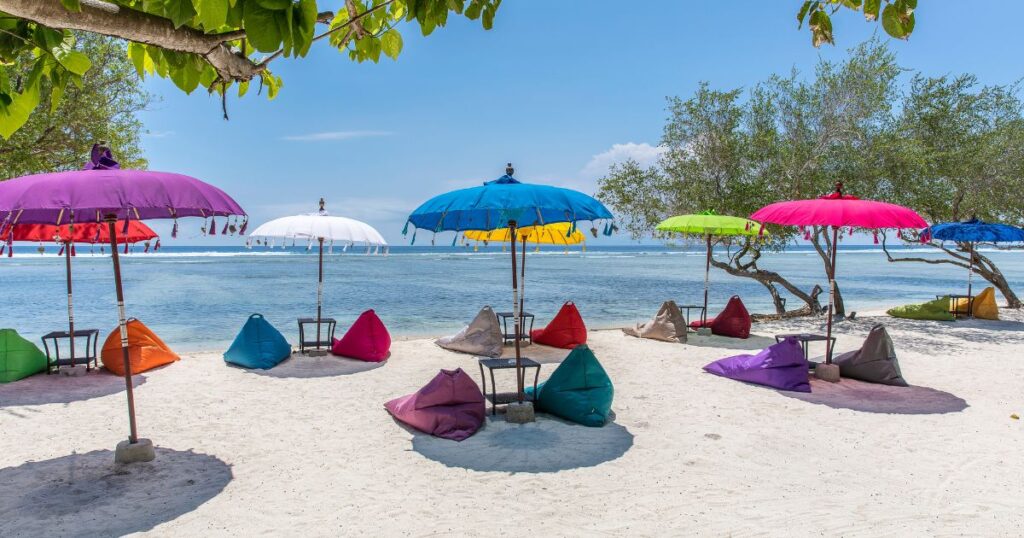
Each island has a personality. Pick the one that matches your pace.
Gili Trawangan (Gili T)
The largest and liveliest. If you picture beach bars, sunset swings, live music, night markets, and a broad mix of travelers—from backpackers to honeymooners—this is your spot. Lodging ranges from boutique bungalows to chic Gili Islands resorts, and the dining scene is the most varied.
By day, join a Gili Islands snorkeling trip; by night, stroll the promenade and catch a movie on the beach. If you are asking, “Is Gili Islands a party island?” the answer is: Gili T has the most nightlife, but you can still find quiet corners on the north and west coasts.
Gili Air
Balanced and intimate. Think artisan cafés, yoga decks, reef-edge snorkeling, and calm beach bars with beanbags facing the sunset.
Gili Islands hotels here often blend rustic design with polished service, and the island’s circular path is perfect for sunrise runs or slow evening cycles.
Gili Meno
Slow and serene. The smallest island is for unplugging—hammocks, hidden coves, and arguably the best “right-off-the-beach” reef on calm days. It is popular with honeymooners and travelers who value privacy. You will find a handful of tasteful villas and low-key eateries that close early; the stargazing is superb.
Which one is “best”?
If you want social energy and choice, pick Gili T. If you want calm with creature comforts, choose Gili Air. If you want peace and minimalism, go to Gili Meno. Many travelers stay on one island and day-trip to the others.
How to Get to the Gili Islands
All routes end at the tiny beachfront jetties—no cars, just sea breeze. Here are the most common ways.
Bali to Gili Islands
Most visitors come this way. How to get to the Gili Islands from Bali (and how to get from Bali to the Gili Islands) is straightforward via a fast boat. Operators depart primarily from Padang Bai (east Bali) and, seasonally, Serangan or Sanur. Sailing times vary with sea conditions, typically ~1.5–2.5 hours from Padang Bai.
If you are staying inland, getting from Ubud to the Gili Islands is usually a shuttle transfer (90–120 minutes) to Padang Bai, then the fast boat. Tickets often bundle hotel pickup, boat passage, and drop-off on arrival.
Bali to Gili Islands distance depends on your exact Bali port and the Gili you land on, but plan for a half-day door-to-door. In peak swell or during the wet season, schedules can shift—build buffer time.
Lombok to Gili Islands
From Lombok’s airport, it is a road transfer to Bangsal Harbor, then a 15–30 minute public boat or fast boat to any Gili. If you are touring Lombok first (waterfalls in Senaru, surf in Kuta Lombok), this is often the most relaxed route.
Organized Gili Islands Tour
If you prefer hands-off logistics, book a Gili Islands tour that includes hotel transfers, timed boat seats, and sometimes snorkeling stops en route. Tours can be a good value in high season and save the back-and-forth of piecing tickets together.
Tip: Seas are generally calmer in the morning. If you are sensitive to motion, aim for earlier departures and pick a larger vessel.
Where to Stay & Best Things to Do
Where to Stay (By Island & Style)
Gili Trawangan: Broadest range—from friendly hostels to polished Gili Islands resorts with pools and sunset lounges. The south/east sides put you near cafés and the night market; the north/west offer quiet beaches.
- Gili Air: Boutique bungalows and mid-range villas dominate. Look for spots right on the path circling the island—sunrise on the east, sunset on the west.
- Gili Meno: Intimate villas and barefoot-luxury hideaways, a few steps from empty sands. Perfect if “do less, enjoy more” is the plan.
- Booking note: Peak periods (June–September; late December) sell quickly. For the best rooms and reef-front locations, book weeks ahead.
Gili Islands Things to Do
- Reef Snorkeling with Turtles: The Gilis sit on a shallow shelf; drift along and you may spot green or hawksbill turtles grazing.
- Diving: There are sites for every level—gentle slopes for beginners, walls, and cleaning stations for advanced divers. Gili Islands diving schools abound on all three islands.
- Stand-Up Paddle & Kayak: Calm mornings are perfect for glassy-water paddles along the coast.
- Sunset Rituals: West-facing beaches on Gili T and Gili Air deliver show-stopping golden hours—classic swing-in-the-sea photo ops included.
- Yoga & Wellness: Beachside shalas, breathwork sessions, and spa treatments add a restorative layer to island time.
- Night Markets & Beach BBQs: Sample grilled fish, satay, and tropical desserts under lantern light.
- Island Hopping: Public boats and private charters make it easy to breakfast on Gili Air, snorkel at Meno’s reef, and dine on Gili T—all in one day.
Snorkeling, Diving & Safety Tips
Gili Islands Snorkeling
House reefs sit close to shore, but the safest snorkeling is from a small boat with a local guide who understands currents and knows where turtles feed. Wear reef-safe sunscreen and a long-sleeve rash guard; bring fins for better control if the drift picks up.
Gili Islands Diving
If you are learning, calm training sites near Gili Air and Meno are excellent. Certified divers can try gentle drifts, reef ridges, and sites with frequent turtle, cuttlefish, and occasionally reef-shark sightings. Pick a reputable dive center with maintained gear and small groups.
Safety & Swim Conditions
Currents: Channels between the islands can run fast when tides change. If you are asking, “Is it safe to swim in the Gili Islands?” the answer is yes—in the right spots and conditions. Avoid crossing channels and always heed local advice.
- Boats: Use marked swim areas and bright tow-floats when snorkeling near traffic lanes.
- Hydration & Heat: Shade and electrolytes matter; the sun is strong even when the breeze feels cool.
- Night Travel: Paths are sandy; a small headlamp makes evening walks easier.
Gili Islands Weather: When to Go
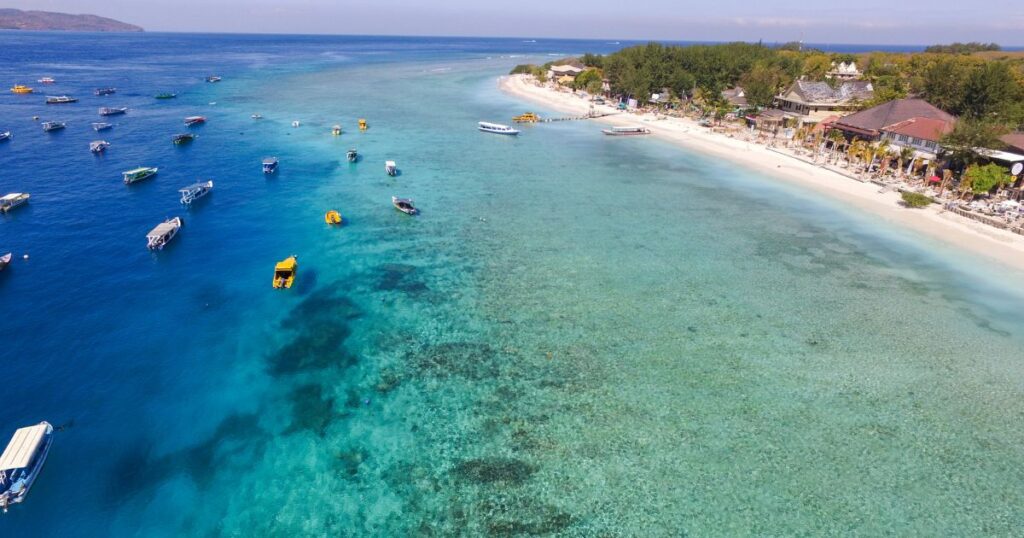
The Gili Islands weather tracks Lombok’s seasons.
- Dry Season (roughly Apr–Oct): Sun-rich days, clearer water, lighter seas—prime for beach time and boat trips.
- Wet Season (roughly Nov–Mar): Warm temps, lush landscapes, occasional squalls. Boats usually run, but swells and schedule changes are more likely.
If you want the widest snorkeling visibility and smoother crossings, the late dry season is a favorite. For quieter beaches and softer prices, aim for shoulder months (Apr–Jun, Sep–Oct).
Gili Islands or Nusa Penida?
Both are fantastic as side trips from Bali, but the vibe differs.
- Gili Islands, Lombok: Car-free calm, swim-off-the-beach reefs, easy island-hopping, softer pace.
- Nusa Penida: Dramatic cliffs, famous viewpoints (Kelingking, Diamond Beach), stronger swells, more driving between sights, fewer natural sandy swim beaches.
If your priority is snorkeling and relaxing, go to the Gilis. If you want epic viewpoints and rugged landscapes, choose Nusa Penida—or split your time if you have a week.
Practicalities & Etiquette
- Cash & ATMs: ATMs exist but can run dry on busy weekends. Bring backup cash.
- Connectivity: Wi-Fi is common; speeds vary. Local eSIMs help.
- Environment: These are delicate reef systems. Do not stand on coral, and choose reef-safe sunscreen.
- Respect: Dress lightly but modestly away from beaches—Lombok and local islands are predominantly Muslim.
- Waste: Refill water where possible; say no to extra plastic.
FAQ
Where are the Gili Islands?
There are three small islands—Trawangan, Air, and Meno—off the northwest coast of Lombok, Indonesia. So if you asked where the Gili Islands are, they sit between Bali and Lombok in the Lombok Strait.
How to get to the Gili Islands?
Fast boats from Bali (Padang Bai/Serangan/Sanur) or short boats from Lombok’s Bangsal Harbor. For how to get to the Gili Islands from Bali, most travelers book a combined shuttle + boat ticket.
Are the Gili Islands worth going to?
Yes—car-free shores, easy reef access, and relaxed days make them a highlight of many Indonesia itineraries.
Are the Gili Islands better than Bali?
They are different. Bali offers culture, dining, and mountains; the Gilis offer slower beach days and effortless snorkeling. Many travelers do both.
Is the Gili Islands a party island?
Gili T has nightlife; Gili Air and Meno are mellow.
Is it safe to swim?
Yes, in calm, marked areas; avoid channels and follow local guidance.
What are the “secret islands” of Gili?
Locals sometimes use this phrase for quieter corners, sandbars, or lesser-visited snorkeling patches around the trio—ask boat crews for day-trip stops.
What is Gili Island famous for?
Turtles, transparent water, car-free lanes, and unforgettable sunsets.
Conclusion
If you dream of cycling sandy paths, snorkeling with turtles before breakfast, and watching the sun drop into a calm sea, the Gilis deliver. With three islands and three distinct moods, you can tailor your Gili Islands vacation—lively evenings on Gili T, café-to-sunset days on Gili Air, or hush-quiet mornings on Gili Meno. Getting there is simple, especially if you plan Bali to Gili Islands transfers in advance.
For sun-seekers, reef lovers, and anyone needing a slower rhythm, the Gili Islands, Indonesia, are a small, shining world of their own—close enough to Bali for convenience, and just far enough to feel like you have truly slipped away.

Luca is a travel photographer and luxury explorer who brings destinations to life through curated guides and stunning visuals.