
Imagine stepping into a glowing palace built entirely from snow and ice. The walls glisten, the chandeliers sparkle, and every corner feels like a piece of frozen art. Ice hotels are more than places to sleep; they are immersive experiences that combine creativity, adventure, and natural beauty. From the icy landscapes of Sweden and Norway to the wilderness of Canada and Alaska, these hotels invite travelers to spend a night in a world carved from winter itself.
For adventurous travelers, ice hotels are no longer just curiosities. They have become a global phenomenon with unique variations across Scandinavia, North America, and even seasonal pop-ups elsewhere. This guide explores where to find them, what it feels like to stay in one, the costs involved, and the most famous names to add to your bucket list.
Table of Contents
What Are Ice Hotels?
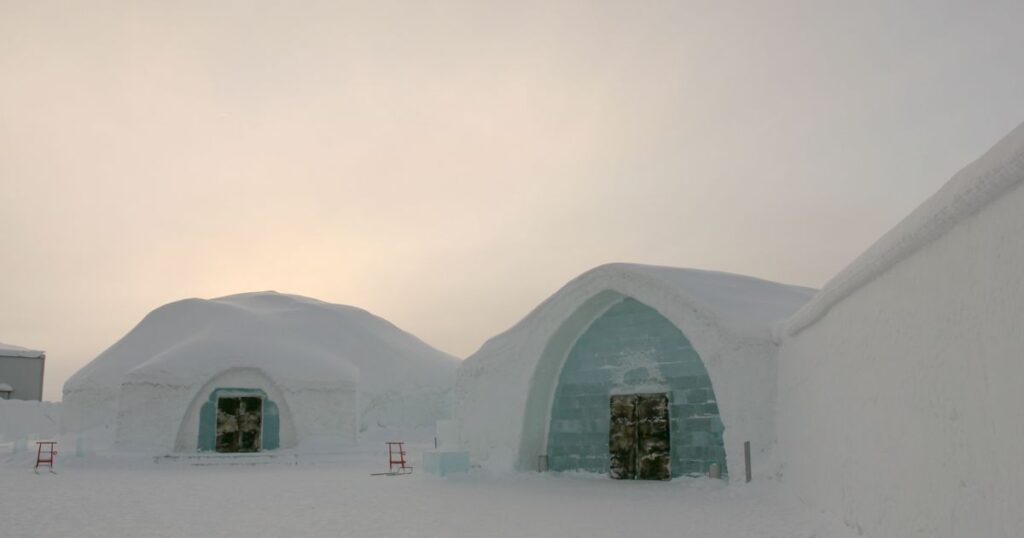
An ice hotel is exactly what it sounds like—an accommodation built entirely from blocks of ice and packed snow. From the exterior walls to the beds, bars, and even chapels, every detail is sculpted to showcase artistic designs. Unlike permanent buildings, these hotels are seasonal. Most are rebuilt each winter when temperatures drop low enough to sustain them, and they melt away in spring.
Despite their temporary nature, ice hotels are carefully designed by professional architects and artists. Many host ice sculptures, themed rooms, and lighting installations that turn frozen walls into galleries. Travelers who wonder if ice hotels are real quickly discover that they are both practical and magical at the same time.
How Many Ice Hotels Are There in the World?
Currently, there are around 20–30 functioning ice hotels around the world, depending on the season. Some are large and famous, such as the original ICEHOTEL in Sweden, while others are smaller and tied to winter festivals. The exact number changes because these structures are rebuilt annually, and new seasonal pop-ups sometimes appear in different countries.
If you are wondering about ice hotels in the world beyond Scandinavia, you will find that Canada, Alaska, and parts of the USA also feature creative frozen stays.
Where Are Ice Hotels Located?
The most famous ice hotels are located in cold regions where temperatures remain well below freezing during the winter months.
- Ice hotels in Sweden – The original and most famous is in Jukkasjärvi.
- Ice hotels in Norway – Popular near the Arctic Circle, with dramatic landscapes and Northern Lights views.
- Ice hotels in Finland – Often paired with glass igloos and Northern Lights safaris.
- Ice hotels in Iceland – Seasonal pop-ups and snow lodges for travelers seeking a unique Arctic stay.
- Ice hotels in Canada – Hotel de Glace in Quebec is one of the largest outside Europe.
- Ice hotels in the USA – Mostly festival-built in winter, plus experiences in Alaska.
- Ice hotels in Alaska – Often part of ice festivals, sometimes with igloo-inspired stays.
So, if you are asking where ice hotels are located, the short answer is Scandinavia and North America, with Sweden, Norway, Finland, Canada, and Iceland leading the way.
Are Ice Hotels Cold Inside?
One of the first questions travelers ask is, Are ice hotels cold? The answer is yes, but they are surprisingly comfortable. The inside temperature usually stays between -5°C and -8°C, which is much warmer than the outside air in the Arctic, which can plunge below -30°C.
Guests do not sleep directly on bare ice. Instead, beds are layered with reindeer hides or thick fur, and visitors are provided with specialized thermal sleeping bags designed for extreme conditions. Once tucked in, most guests find they stay warm enough through the night.
What Is It Like to Stay in an Ice Hotel?
Spending a night in an ice hotel is unlike any other travel experience.
- The Arrival: Guests enter a glowing ice corridor, often decorated with intricate carvings.
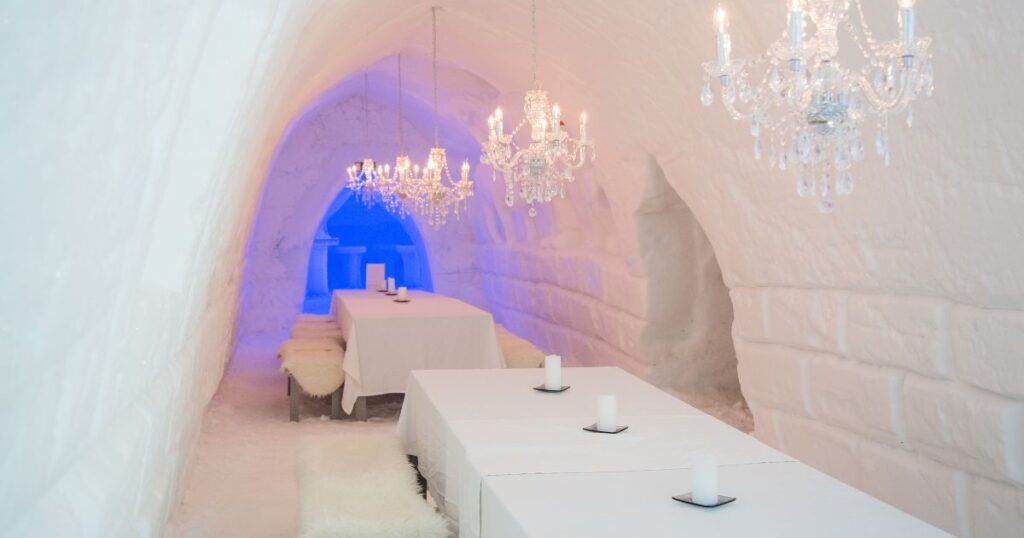
- The Rooms: Suites are themed with artistic ice sculptures. Furniture is carved from solid blocks of ice.
- The Bed: Covered with animal hides and fitted with thermal sleeping bags.
- The Bar: Drinks are usually served in glasses made from ice.
- The Chapel: Many ice hotels have chapels for weddings and vow renewals.
- Facilities: Heated annexes provide showers, toilets, and locker rooms, since ice cannot accommodate plumbing.
For travelers who want the full Arctic adventure, many hotels also offer husky safaris, snowmobiling, and Northern Lights tours as part of the package.
Famous Ice Hotels Around the World
- Sweden: The Original ICEHOTEL in Jukkasjärvi
- Built in 1989, this remains the most famous ICEHOTEL in the world.
- Known for artistic suites designed by international sculptors.
- Rebuilt every year from ice blocks cut from the nearby Torne River.
- Canada: Hotel de Glace (Quebec)
- The only large-scale ice hotel in North America.
- Features giant ice slides, chapels, and a massive ice bar.
- Norway: Snowhotel Kirkenes
- Located near the Arctic Circle.
- Popular for husky safaris, reindeer experiences, and views of the Northern Lights.
- Finland: Arctic SnowHotel in Rovaniemi
- Close to Santa Claus Village.
- Offers both snow suites and glass igloos for viewing the Northern Lights.
- Iceland: Seasonal Ice and Snow Lodges
- Iceland does not have a permanent ice hotel but offers smaller seasonal pop-ups.
- Travelers can book unique igloo or snow lodge experiences.
- Alaska and USA: Seasonal Ice Lodges
- Built during ice festivals and carnivals.
Provide more of a novelty experience but still capture the essence of frozen stays.
How Do People Sleep in Ice Hotels?
Another common concern is comfort. Travelers often ask, How do people sleep in ice hotels? The process is straightforward:
- Guests are given insulated sleeping bags tested for Arctic conditions.
- The beds are layered with hides, fur, or thermal padding.
- Guests wear warm thermal clothing and wool socks.
- Staff sometimes offer hot drinks in the morning to help guests wake up comfortably.
- Many travelers report they sleep better than expected, thanks to the silence and steady cold.
What Is the Most Famous Ice Hotel?
Without question, the ICEHOTEL in Jukkasjärvi, Sweden, is the most famous. It was the first of its kind and has become a global icon. Travelers from around the world come to see its themed art suites, ice bar, and spectacular design.
Ice Hotel Toilets: How Do They Work?
One practical question many visitors have is, Ice hotel toilet – how does that work? Since the structure is made of ice, plumbing is impossible.
- Most hotels provide heated toilet and shower facilities in nearby buildings.
- Premium suites sometimes have private annexes attached with heated bathrooms.
- Guests are encouraged to prepare for a short walk at night if nature calls.
This arrangement ensures both comfort and practicality without damaging the ice structures.
Best Ice Hotels to Experience Once in a Lifetime
If you are planning your dream frozen stay, these are the best ice hotels worth considering:
- ICEHOTEL, Sweden – The original and most famous.
- Hotel de Glace, Canada – North America’s winter wonderland.
- Snowhotel Kirkenes, Norway – Adventure-filled Arctic escape.
- Arctic SnowHotel, Finland – Perfect for Northern Lights seekers.
- Seasonal Ice Lodges in Iceland and Alaska – Short-term but unforgettable experiences.
What Is the Meaning of the Ice Hotel?
The term simply refers to a temporary accommodation built from ice and snow. While it may sound like a fantasy, the meaning of the ice hotel is rooted in architectural innovation and tourism creativity. These hotels combine hospitality with seasonal art installations, creating once-in-a-lifetime experiences for travelers.
Conclusion
Ice hotels are proof that travel can be both adventurous and artistic. They invite guests into frozen worlds where walls, ceilings, and even drinking glasses are crafted from ice.
The appeal is not just in the novelty. It is in the craftsmanship, the artistry, and the memory of spending a night in a palace that disappears with the spring thaw. For travelers seeking unforgettable journeys, an ice hotel is not just accommodation—it is an experience worth every shiver.

Claire is a travel content strategist and hospitality insider specializing in stylish getaways, curated travel guides, and experience-led itineraries. Her insights are shaped by years in luxury hotels and global tour operations.